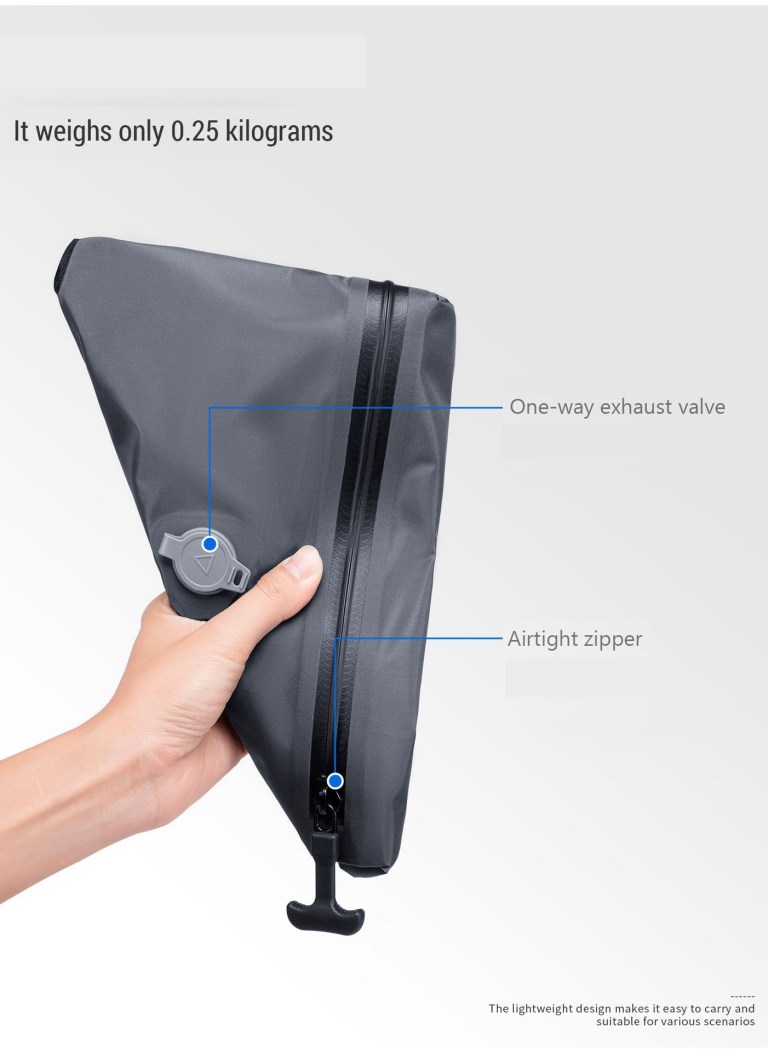
Ask ten importers what a vacuum compression bag is and nine will say “home storage.” That answer describes maybe 20% of the market.
A properly engineered PA+TPU compression bag is not a plastic sack with a valve. It is a logistics and merchandising tool, and the buyers who understood that early have quietly built categories out of it. Here are six applications we see moving real volume, plus the technical variables that decide whether they work.
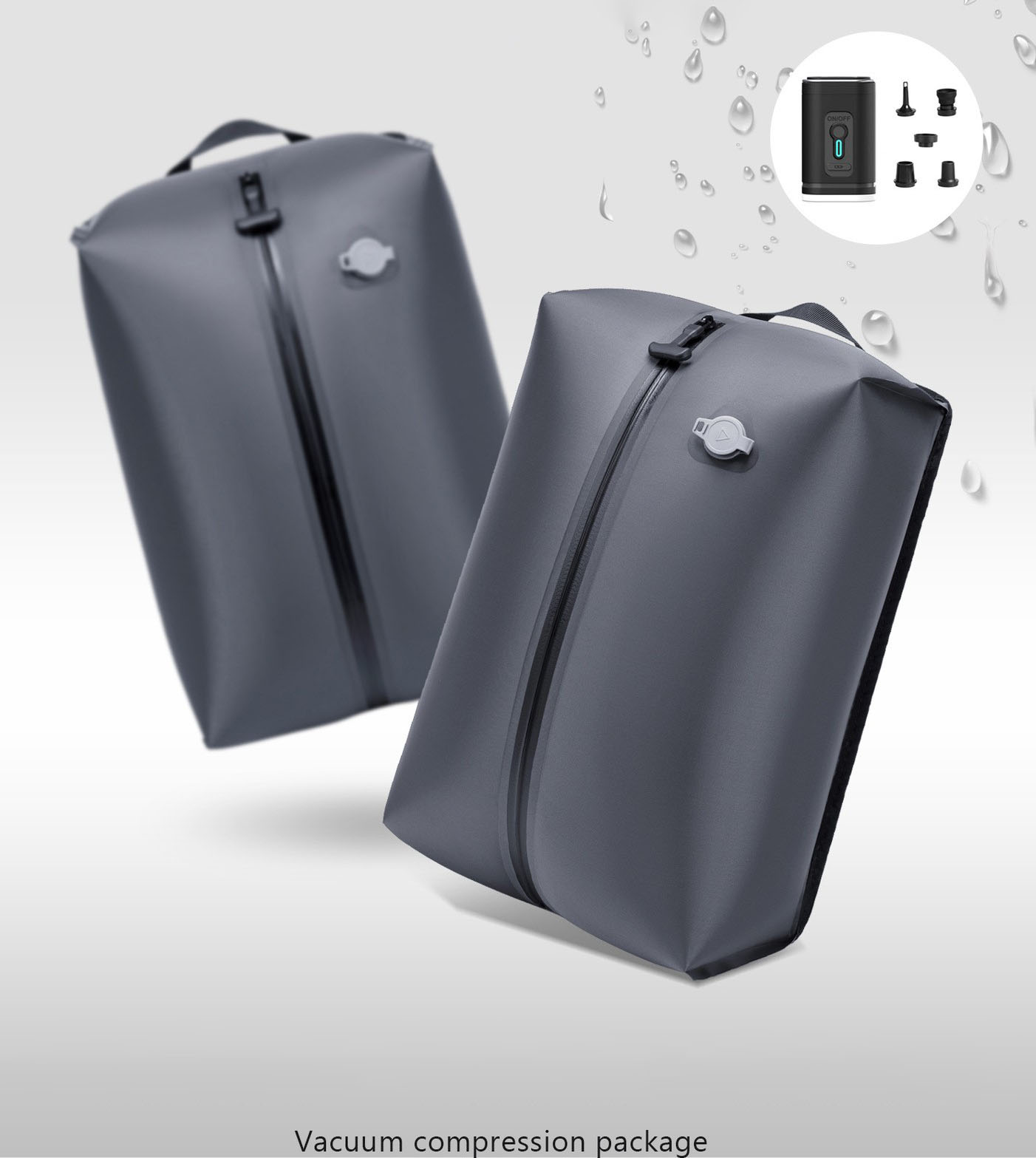
1. Travel retail and luggage accessories.
Compression bags are the single highest-margin accessory in the luggage aisle, because they solve a problem every traveler has already paid to solve once: not enough space.
For a brand, the value is bundling. A compression set packaged with a carry-on or a duffle lifts average order value without adding a single new hardgood SKU. For distributors, it is a low-cube, low-freight, high-turns product — one pallet of compressed bags occupies a fraction of the space of one pallet of hard luggage.
2. Home organization and seasonal rotation.
Winter coats, duvets, and out-of-season children’s clothing consume closet volume that households are actively trying to reclaim. The B2B opportunity here is not the single bag sold through a marketplace; it is the multi-size set sold through home retailers, warehouse clubs, and television or social commerce channels.
Sets outsell singles in this segment by a wide margin. Buyers who configure a 3-size or 5-size set with consistent branding and a reusable storage tote consistently outperform those selling one-size units.
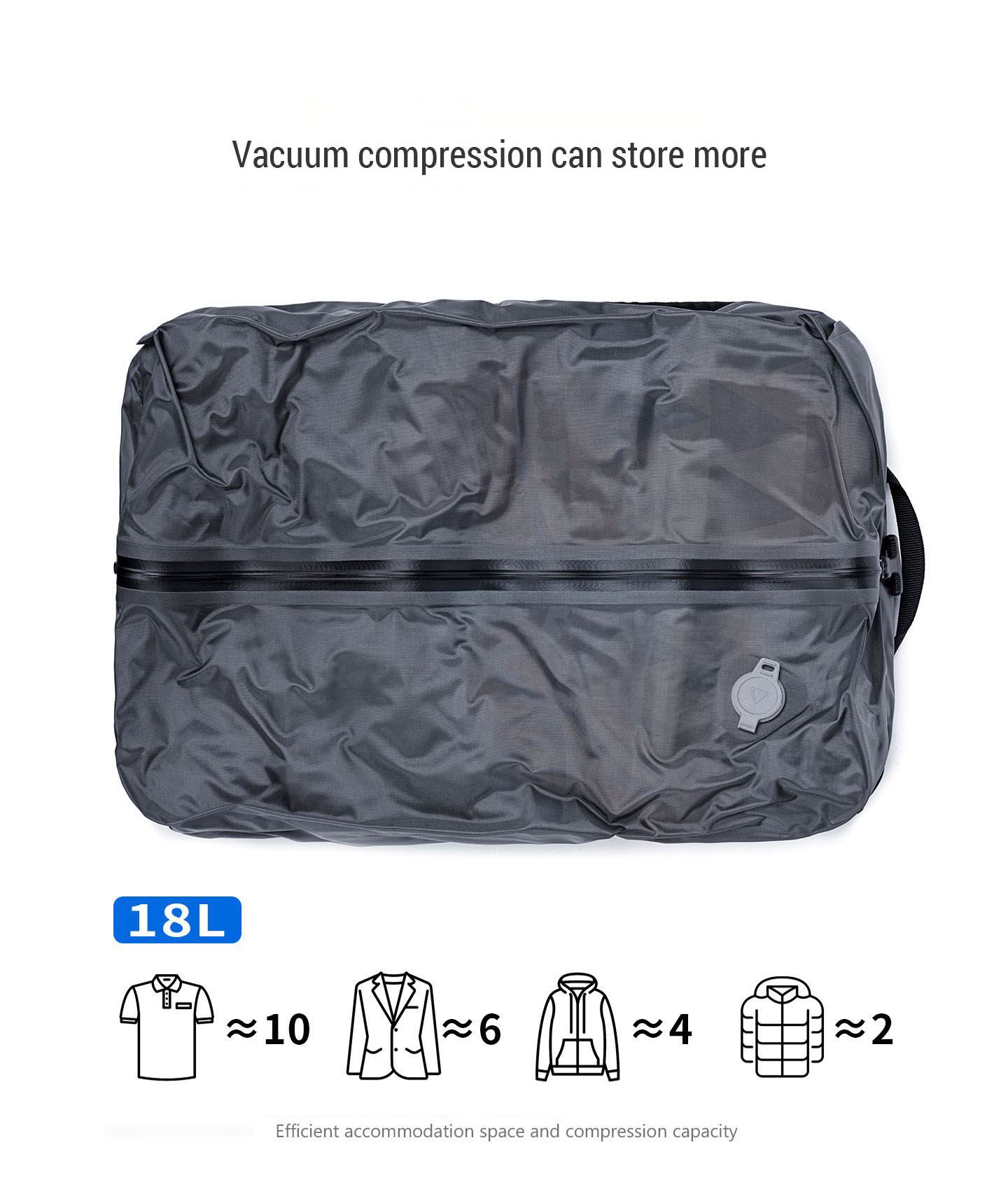
3. Outdoor, expedition and military-adjacent supply.
On a multi-day trek, volume is a safety variable. Compressing a sleeping bag and insulation layers by 50–70% frees pack space for food and water and lowers carried weight.
This segment has strict requirements: film thickness, puncture resistance, cold-flex performance, and a valve that does not fail at altitude or in a wet environment. Cheap film is not a saving here — it is a field failure. If you are selling into outdoor channels, your supplier’s material specification is your product liability.
4. Baby and children’s goods.
This is the fastest-growing application in the category and the most under-served.
Strollers, cribs, bassinets and baby textiles create linear storage problems that parents cannot solve with a shelf. Compression bags built for these dimensions — long form factors, reinforced seams, non-toxic materials — turn a nursery into a manageable space. The category benefits from a natural repeat and gifting cycle, and material safety documentation is straightforward to market.
5. Moving, relocation and self-storage services.
Moving companies and self-storage operators are B2B buyers with recurring, non-seasonal demand. Compressing linens, coats and textiles lets them quote smaller units and fit more per locker — a direct revenue argument, not a convenience one.
This channel buys in volume, values durability over appearance, and rarely churns when quality holds. For a manufacturer, it is the most stable order book in the compression segment.

6. E-commerce bundles, subscription boxes and private label programs.
Compression bags are ideal subscription and bundle filler: high perceived value, low shipping weight, no size variants to manage, no breakage claims.
For private label brands, they are also the cheapest way to enter a physical product line. A logo-printed compression set needs no tooling, no pattern development and no certification beyond material documentation — which means a brand can test physical product demand in 4–6 weeks rather than 6 months.
The technical variables that separate a product from a return.
Buyers who lose money in this category almost always lost it on specification, not on price. The four variables that matter:
- Film composition. PA+TPU multilayer film, as opposed to single-layer PE, delivers the puncture resistance, flexibility and airtightness that make reuse realistic. Reusability is the whole promise; a bag that fails after two uses generates returns, not repeat orders.
- Valve engineering. The valve is the failure point in the majority of complaints. Choose a design that holds vacuum over months, not days.
- Seam integrity. Thermal weld width and consistency determine leak rate. This is a manufacturing discipline, not a design choice.
- Thickness tolerance. Declared micron thickness must be real. Overshipping on thickness claims is one of the most common causes of chargebacks in Western retail programs.
Quick facts: SimiBag manufactures PA+TPU vacuum compression bags and airtight packing cubes in Guangzhou, China, for travel, home, outdoor, baby and e-commerce channels — private label and OEM, with export documentation support.
If you are planning a compression bag line for a travel, home, or children’s channel, tell us the target retail price and the channel, and we will engineer the film spec backwards from it. That conversation starts at simibag.com.
#VacuumStorageBags #CompressionBags #PackagingCube #PAandTPU #PrivateLabelProducts #VacuumBagManufacturer #TravelAccessories #HomeOrganization #OEMManufacturer #GuangzhouChina #B2BSourcing #AmazonFBA #RetailBundles
Whichever application you are sourcing for, the qualification process is the same. Our 10-point checklist for choosing a vacuum bag manufacturer walks through capacity, materials, certifications and LATAM logistics.