
Most brands don’t have an OEM problem or an ODM problem. They have a decision-timing problem.
They choose the model that fits their team this quarter, then discover eighteen months later that it no longer fits their brand. We build both models every week at SimiBag, and the pattern is consistent enough to write down.

The difference, in one sentence.
OEM: you own the design, the fit, the pattern and the IP. We engineer it, build it, and protect your exclusivity.
ODM: you choose from a proven chassis, then customize the parts that customers actually touch — color, hardware, lining, logo, packaging, internal organization.
Neither is more advanced. They solve different problems.
Choose OEM when differentiation is your business model.
If your customers buy from you because nobody else sells that exact bag, OEM is the only path that protects you.
OEM suits you if you have in-house designers or a design partner, if you can invest the technical development time (pattern development, tooling, multiple fit rounds), and if you can commit to a volume that justifies dedicated setup.
The reward is a product nobody can undercut with a screenshot from your own product page. That exclusivity is worth real margin — and in a market where an Amazon listing can be cloned in three weeks, it is increasingly the only durable moat a bag brand has.

Choose ODM when speed to market is the priority.
ODM is not “the cheap option.” It is the fast option, and speed has a price of its own.
A brand entering a new category — say, adding a weekender or a commuter laptop bag to a line that currently sells totes — rarely has the design bandwidth to develop from zero. Using a validated chassis with proven yield, known freight weight, and tested hardware removes months of risk from the calendar.
The trade-off is deliberate: you give up structural uniqueness in exchange for a launch date, and you differentiate through color, branding, packaging and storytelling instead. Done well, this works. Hundreds of successful direct-to-consumer bag brands are built exactly this way.
The model most successful brands land on.
In practice, mature brands converge on a hybrid: an ODM-grade chassis with OEM-level customization.
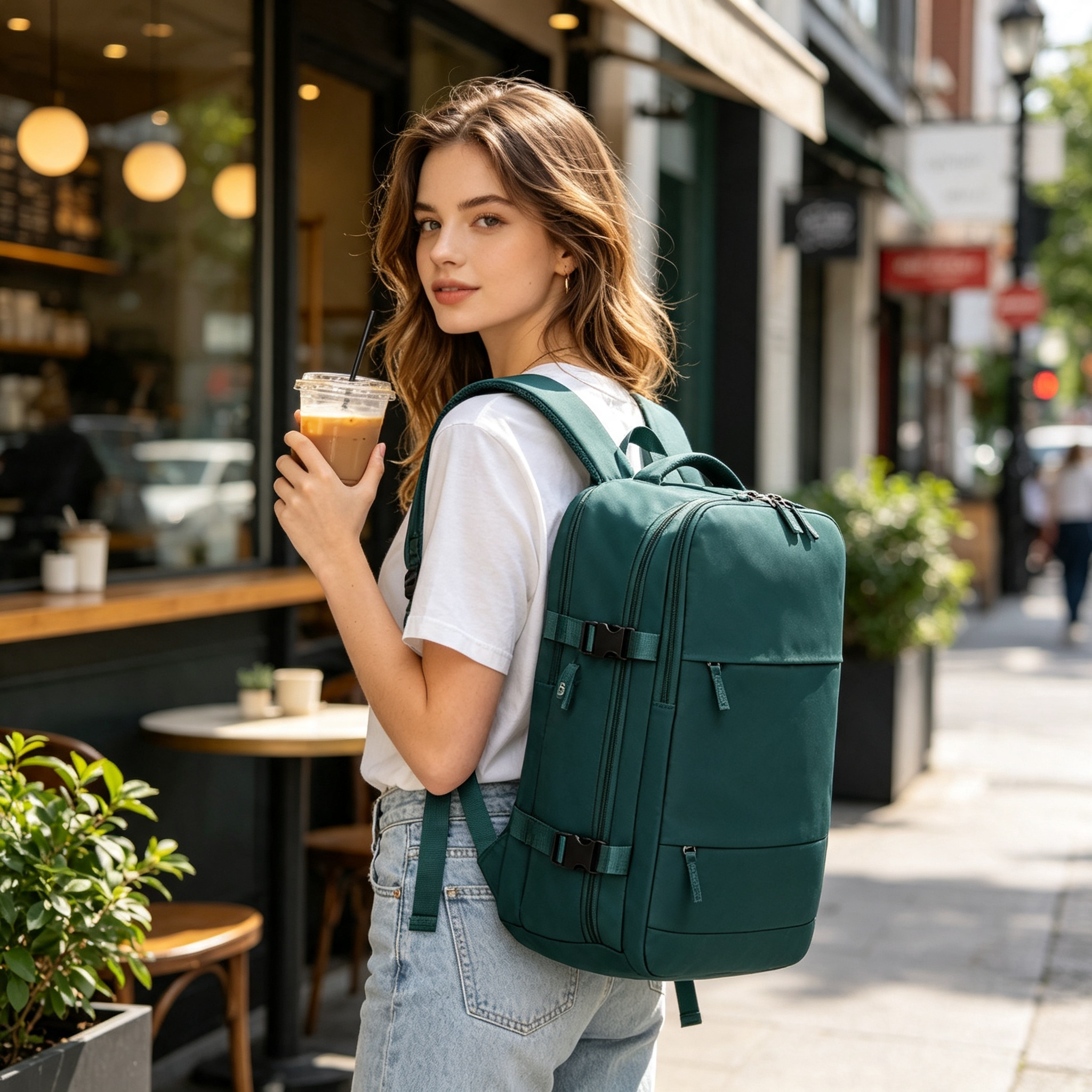
They keep the load-bearing architecture — the pattern that has already proven it survives a warehouse, a flight, and a student — and they replace everything the end customer perceives. Custom zipper pullers. Dyed-to-match webbing. A signature lining print. An internal laptop sleeve sized to their market’s devices. Retail-ready packaging that carries their name, not ours.
The result launches like an ODM product and sells like an OEM one.
What actually drives the price.
Buyers often assume OEM costs more. The truth is more specific — price is driven by four variables, and design ownership is not one of them:
- Material specification. 600D recycled polyester and 1680D ballistic nylon are not in the same cost universe.
- Hardware and trims. YKK-grade zippers, alloy sliders, magnetic closures and molded buckles move cost more than fabric ever does.
- Volume and MOQ tier. Setup cost is spread across the run; at 500 pieces it dominates, at 5,000 it nearly disappears.
- Complexity of assembly. Every extra panel, pocket and reinforcement point adds sewing time — and sewing time is where bags are actually built.
This is why a serious factory quotes from a technical spec, not from a photo. If a supplier gives you a firm price from a picture, they are guessing, and you will pay for the guess later.
How to decide in one meeting.
Ask three questions:
- Does our brand win on uniqueness, or on availability?
- Can we realistically fund and manage a 3–5 month development cycle right now?
- What is the cost of being three months late to this category?
If uniqueness and development capacity are both yes, go OEM. If the category window is closing, go ODM and out-execute on brand. If you are unsure, hybrid is not a compromise — it is usually the highest-return route for the money.
Quick facts: SimiBag runs both OEM and ODM backpack programs from Guangzhou, covering custom backpacks, laptop bags, travel bags and PA+TPU vacuum compression bags, with export documentation prepared for EU and US retail requirements.
Whichever path you choose, it starts with a conversation about your spec, not a catalog. Send us your brief at simibag.com and we will tell you which model actually fits your timeline.
#OEMvsODM #CustomBackpackManufacturer #PrivateLabelBackpacks #BackpackOEM #GuangzhouManufacturer #OEMODM #ProductDevelopment #B2BBuyers #SourcingStrategy #LaptopBagManufacturer #BagFactory #SupplyChainManagement