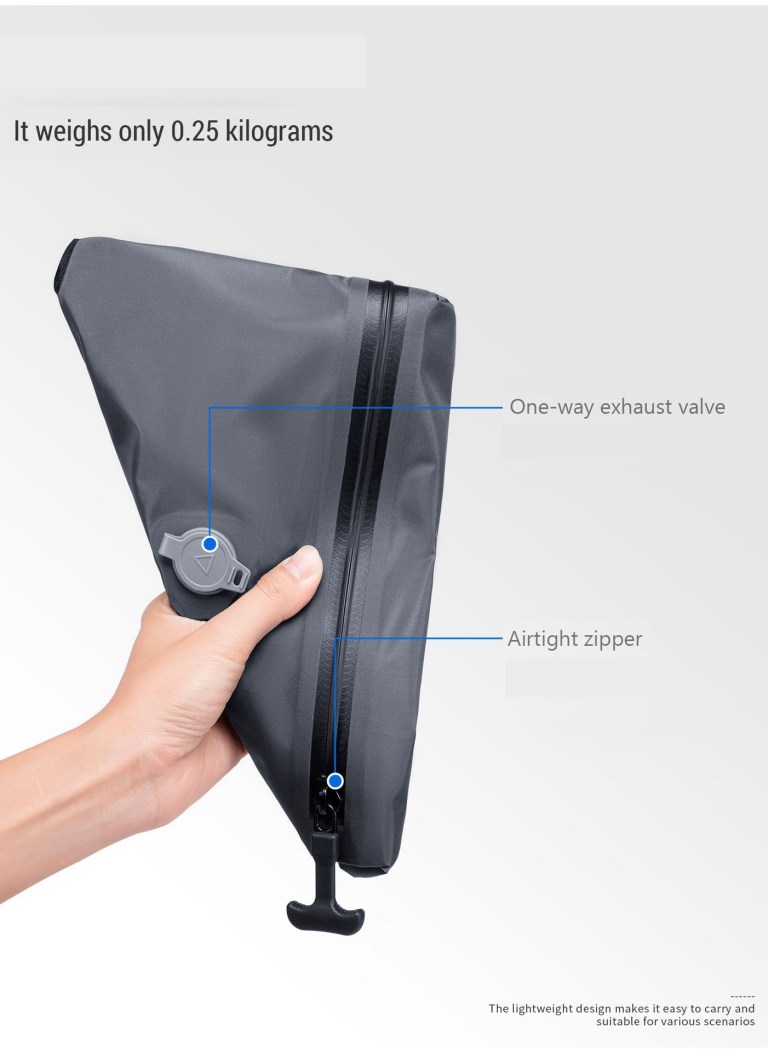
No Pump Vacuum Bags: The Ultimate Travel Hack
One of the biggest barriers to using vacuum compression bags while traveling is the pump. Traditional manual pumps are bulky to carry, and electric pumps require batteries or a wall outlet. No pump vacuum bags solve this problem entirely.
These bags use a roll-up compression mechanism that requires no external tools — just pack, seal, and roll.
How No Pump Vacuum Bags Work
No pump vacuum bags operate on a simple principle: a double-track zipper seals the bag airtight, and a one-way valve allows air to escape when pressure is applied. By rolling the bag from the sealed end toward the valve, you force air out through the valve without needing suction.
The valve closes automatically when you release pressure, keeping the bag compressed.
Advantages Over Pump-Based Bags
- No equipment needed — Works anywhere, anytime
- Lightweight — The bag itself is the only thing you carry
- TSA-friendly — No electronics or batteries to declare
- Quiet — No pump noise in hotel rooms or shared spaces
- Lower cost — Fewer components means lower retail price
Compression Comparison: No Pump vs Electric Pump
| Factor | No Pump (Roll-Up) | Electric Pump |
|---|---|---|
| Compression ratio | 40-50% | 60-75% |
| Time per bag | 30-60 seconds | 15-30 seconds |
| Portability | Excellent | Good (small pump needed) |
| Best use case | Carry-on, short trips | Checked luggage, long trips |
Who Needs No Pump Bags?
No pump vacuum bags are ideal for:
- Airlines and travel retailers — Easy in-flight demonstration, impulse buy potential
- Outdoor and camping brands — Lightweight packing for backpackers
- Hotel and hospitality — Guest amenity packing solutions
- Military and tactical — Compact storage in limited-space environments
Material Options
No pump bags require high-quality materials to maintain a reliable seal under repeated rolling pressure:
- PA+PE: Standard option, good for occasional travel, lower cost
- PA+TPU: Premium option, better durability, BPA-free, longer air retention
SimiBag offers both material options with customized valve placement for brand-specific designs.
About SimiBag:
SimiBag is a vacuum storage bag manufacturer based in Guangzhou, China. Since 2017, we have been producing custom PA+TPU vacuum compression bags, backpack OEM, and private label storage solutions for global B2B buyers.
Visit https://simibag.com for more information.
How One-Way Valve Technology Works
The heart of any no-pump vacuum bag is its one-way air valve. This small but critical component consists of a silicone diaphragm that opens when pressure is applied from inside the bag — such as when you roll the bag — and seals shut the moment the pressure equalizes. This ensures that once air is pushed out, it cannot flow back in. The valve design is self-sealing and requires no external suction source. High-quality valves, like those used in SimiBag products, are tested for over 10,000 cycles to ensure long-term reliability. This technology transforms any backpack, suitcase, or drawer into a vacuum-sealed storage space with nothing more than your own hands.
No Pump vs. Traditional Pump-Based Vacuum Bags
Traditional vacuum compression bags require either a manual hand pump or an electric pump to remove air. Manual pumps are compact but still add bulk to luggage, and the pumping motion can be tiring — especially when compressing multiple bags. Electric pumps are faster but require batteries, USB power, or a wall outlet, making them impractical for camping, long flights, or off-grid travel. No-pump bags eliminate all of these drawbacks. With no equipment needed, you can compress your clothes anywhere — in a hotel room, at the airport gate, or even inside your tent. The roll-up mechanism takes about 30 seconds per bag and achieves up to 80% space reduction, matching the compression ratio of most pump-based systems. For travelers who value simplicity and portability, no-pump bags are the clear winner.
Why B2B Buyers Should Stock No-Pump Vacuum Bags
For e-commerce sellers and retail buyers, no-pump vacuum bags represent a high-margin, high-demand product category. Consumers consistently rank “ease of use” as the #1 factor when choosing compression bags, and no-pump bags deliver exactly that. With higher perceived value (no extra pump to buy or lose), retailers can command premium pricing — typically 20-30% higher than standard pump-based bags. The category also sees strong repeat purchases: travelers who discover no-pump bags often return to buy more in different sizes. For private label or OEM buyers, SimiBag offers custom branding on both the bags and packaging, with MOQ starting at 5,000 pcs per design. The compact flat-pack design also reduces shipping container volume by up to 40% compared to pump-based bag sets, lowering logistics costs significantly.
Use Cases Beyond Travel
While no-pump vacuum bags are best known for travel, their versatility extends far beyond suitcases. Gym-goers use them to separate clean gym clothes from dirty gear in their duffel bags. Campers and hikers rely on them to compress sleeping bags, puffy jackets, and base layers — saving critical backpack space for food and water. Business travelers appreciate being able to pack a full week of dress shirts and suits into a single carry-on, eliminating checked baggage fees. Home organizers use them for off-season clothing storage under beds, in closets, or in storage bins. Even outdoor photographers use small no-pump bags to keep camera gear dry and organized. The simple, tool-free design means these bags work anywhere, anytime — no electricity, no batteries, no extra equipment required.