
There is a version of the smart backpack story that sells beautifully at trade shows: a USB port here, a hidden pocket there, maybe a tracking module. There is a different version that actually reaches a customer’s hands — and it is decided almost entirely by compliance and engineering detail. Batteries, radio modules and internal wiring turn a simple soft-goods program into a regulated product. Here is what separates a smart backpack that ships from one that sits in a warehouse.

Why Compliance Decides Whether Your Smart Backpack Ships
A backpack is soft goods until you build a battery into it. The moment a power bank, charging module or tracking device is integrated, the product touches dangerous-goods rules, radio-frequency regulation and destination-market electronics law. That changes everything upstream: the bill of materials, the packaging artwork, the shipping documents and the warranty terms. Regulators in the EU, the US and the UK each treat wireless and battery products differently, so the same backpack can be compliant in one market and blocked in another. Buyers who treat electronics as a feature list discover the problem at the port. Buyers who treat it as a compliance program discover it at the design review, where it is still cheap to fix.
UN38.3, IATA and the Sea-Freight Lithium Declaration
Every lithium cell and pack must pass UN38.3 testing before it can be transported, and the IATA Dangerous Goods Regulations set the packing instructions — PI 965 through PI 970 — that govern air shipment. Two thresholds matter more than any other: 100 Wh per battery for passenger aircraft and 160 Wh for cargo aircraft. Cells shipped by air must generally sit at or below a 30% state of charge, and an installed battery changes the classification of the finished goods. By sea, lithium batteries require a declaration, correctly marked UN3481 packaging and documentation that matches the actual configuration. None of this is optional, and none of it can be retrofitted after the container is booked.
Engineering the Electronics: Wiring, Waterproofing and RF Shielding
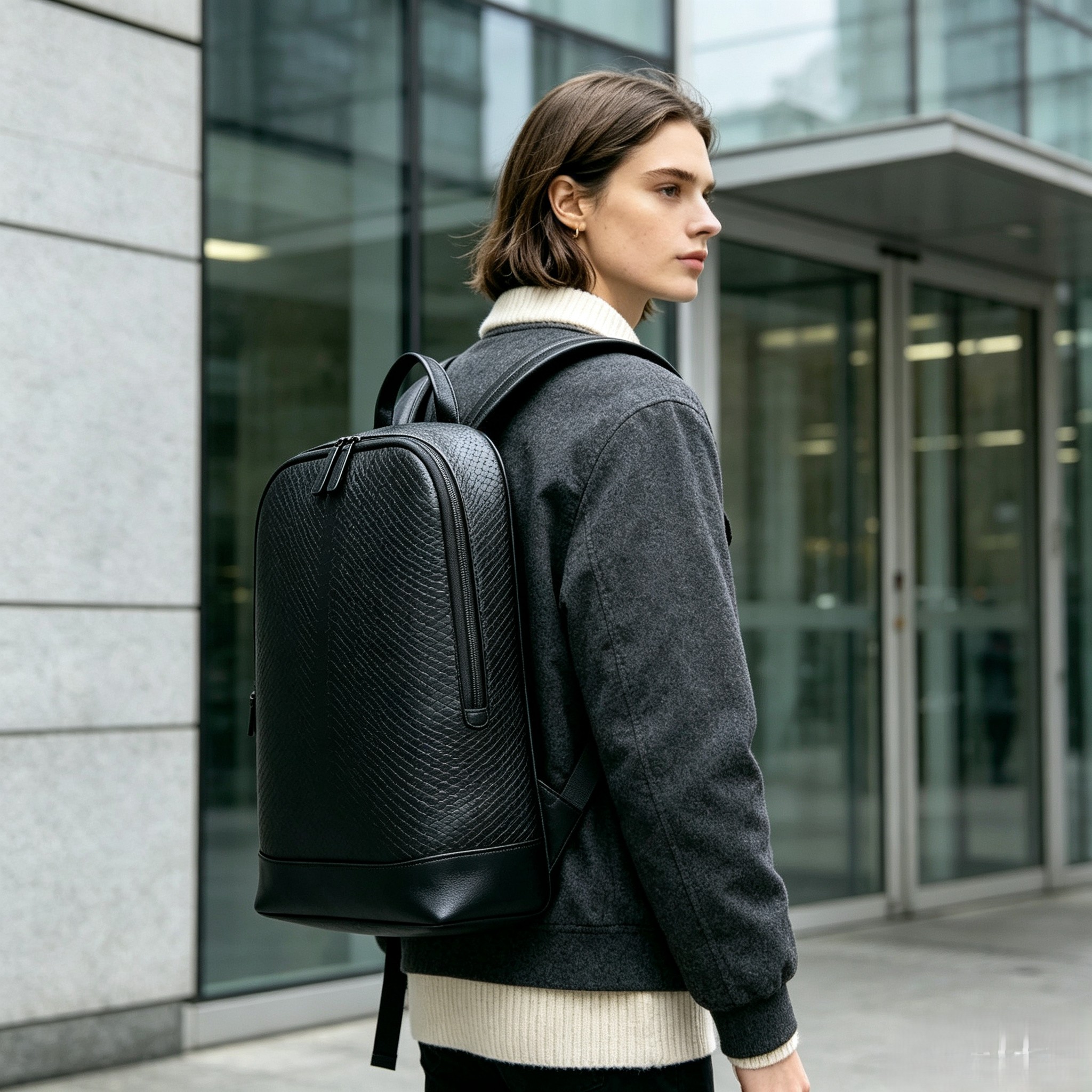
Compliance gets you onto the water; engineering gets you through the warranty period. Internal charging runs on short, well-routed cabling — typically 22 AWG with strain relief at every flex point — inside a sealed channel that keeps the USB port at IPX5 or better. Anti-theft pockets need more than a hidden zip: a YKK zipper behind a folded flap, plus an RFID-blocking lining tuned to the 13.56 MHz band, is what actually stops card skimming. Heat is the quiet failure mode, so battery compartments need ventilation and separation from the wearer’s back. Every one of these decisions is made at the sample stage, which is why our first samples are ready in 3–7 days rather than three weeks.
Modular Design: The Fix for Returns and After-Sales
The most expensive word in smart backpack manufacturing is “warranty”. A sealed battery module turns a simple repair into a full replacement, and international return freight turns a replacement into a loss. The answer is modularity: a detachable battery pack, a swappable tracker and a replaceable charging board, all accessible without cutting stitching. Buyers who specify modular electronics typically see return-related costs fall by 30–40%, because a faulty module ships as a small parcel instead of a whole bag. It costs roughly 5–8% more at the bill-of-materials level — and it is the cheapest insurance in the program. It also protects the brand: a customer who can swap a $12 module does not leave a one-star review about a $90 bag.

Smart backpacks are not won on feature lists; they are won on compliance and engineering discipline. UN38.3 testing, IATA thresholds, a 30% state of charge, IPX5 sealing, 13.56 MHz shielding and modular service design are the details that decide whether a program scales or stalls. If you want to build electronics into bags without inheriting the risk, talk to SimiBag — Guangzhou OEM/ODM manufacturing for custom backpacks and vacuum storage bags, with samples in 3–7 days and AQL-audited production in 25–35 days. Start at https://simibag.com.